
8 Essential Steps to Becoming a Successful Affiliate Marketer in 2024

In the ever-evolving world of digital marketing, mastering how to become an affiliate has emerged as a pivotal strategy for those looking to generate a noticeable income stream online. Affiliate marketing, a method where individuals earn a commission by promoting a company’s products or services, has become an attractive avenue for aspiring marketers and entrepreneurs alike. Understanding the intricacies of affiliate marketing programs, harnessing the power of affiliate links, and developing a robust affiliate marketing plan are essential steps in establishing a lucrative affiliate marketing business. The significance of adopting effective affiliate strategies and learning how to make money with affiliate marketing cannot be understated, as it opens doors to endless opportunities in the digital space.
This article lays out a concrete pathway for individuals aiming to carve out a successful career in affiliate marketing by the year 2024. Starting with the crucial first step of picking a profitable niche, it guides readers through finding the right affiliate marketing programs, creating an engaging website or blog, and producing high-quality content that resonates with the target audience. Subsequent sections delve into strategies for driving traffic to your site, analyzing and optimizing performance for maximized earnings, diversifying income streams to ensure financial stability, and finally, scaling and growing your affiliate marketing endeavors. By implementing these strategic steps and utilizing the tips on affiliate marketing provided, readers will be well-equipped to become successful affiliate marketers, adept at navigating the competitive world of affiliate marketing platforms and strategies.
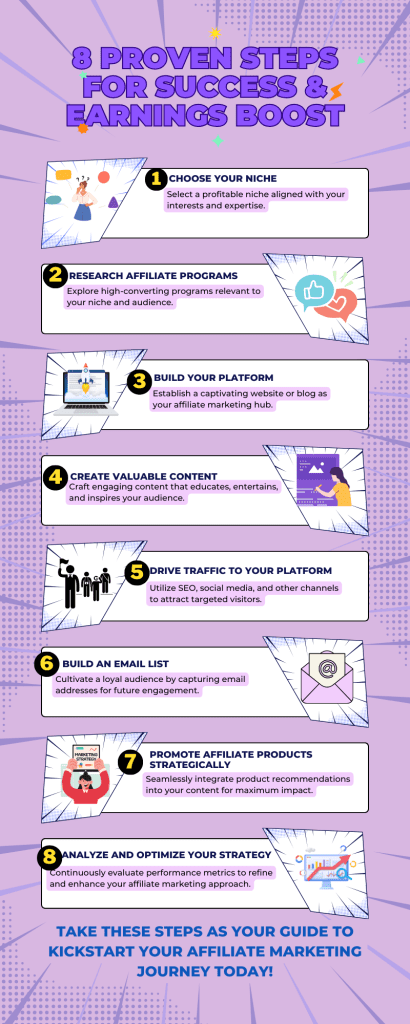
Step 1: Pick a Profitable Niche
Why Picking a Niche Matters
Selecting the right niche is foundational to the success of an affiliate marketing business. It determines the focus of promotional activities and influences the likelihood of achieving significant earnings. A well-chosen niche aligns closely with the affiliate’s interests and expertise, which can enhance content authenticity and improve audience engagement. Moreover, a niche with less competition may offer better opportunities for visibility and growth, making it easier to establish a strong online presence and authority.
Researching Market Demand
To ensure the chosen niche has enough demand to be profitable, thorough market research is essential. This involves using tools like Google Trends, AHREFS, and SEMRush to analyze search volumes and trends within specific areas. Affiliates should look for a balance between demand and competition, which can provide a fertile ground for sustainable growth and profitability. Research should also include identifying the buyer’s persona and understanding their preferences and buying behaviors, which are crucial for tailoring marketing strategies effectively.
Aligning with Personal Interests
The niche an affiliate selects should resonate personally with them. This alignment helps in creating more engaging and passionate content, which can attract and retain a dedicated audience. Personal interest in the niche can lead to deeper insights and more innovative approaches to promotion, distinguishing an affiliate’s offerings from the competition. Additionally, working within a niche that aligns with personal passions can make the marketing process more enjoyable and fulfilling, increasing the likelihood of long-term commitment and success.
By meticulously choosing a niche that is both in demand and personally engaging, affiliates can build a robust platform for their marketing efforts, leading to better content, stronger audience relationships, and increased earnings potential.
Step 2: Find the Right Affiliate Programs
Research and Review Programs
Finding the right affiliate programs is pivotal for success in affiliate marketing. Beginners should start by understanding the difference between in-house affiliate marketing programs and affiliate networks, as these are not interchangeable. It is advisable for newcomers to affiliate marketing to initially sign up with affiliate networks, which often provide a more user-friendly interface and better management tools, making the process smoother and less overwhelming.
Factors to Consider
When selecting an affiliate program, several key factors must be considered to ensure it aligns with one’s marketing strategy and goals. The ease of use of the program is crucial; it should offer straightforward setup and management, and ideally, provide tutorials to assist new users. A reliable point of contact within the program can offer invaluable support and guidance, enhancing the affiliate’s understanding and management of their campaigns.
Commission structure and payment terms are also significant; programs should offer competitive rates and clear, reliable payment methods to ensure affiliates are compensated fairly and on time. Programs typically pay affiliates 30 days post-sale, but terms can vary, with some extending up to 90 days.
Joining Top Networks
For those new to affiliate marketing, joining top affiliate networks can be a strategic move. Networks like Amazon Associates, ShareASale, ClickBank, CJ Affiliate, Rakuten Marketing, and eBay Partner Network offer a diverse range of products and have established reputations for reliability and ease of use. These networks support affiliates with tools and resources to effectively promote products and track their performance, making them ideal for beginners looking to navigate the complexities of affiliate marketing.
Affiliates should ensure the network’s terms align with their marketing practices and payment needs. For instance, some networks offer immediate payment options which might be necessary for affiliates requiring quick access to funds. Additionally, the cookie life or referral period should be considered, as it can significantly impact earnings. Lastly, the approachability of the network’s support team and their responsiveness to inquiries can greatly influence an affiliate’s experience and success.
By carefully researching and considering these factors, affiliates can select programs and networks that not only match their niche but also offer the best potential for growth and profitability in their affiliate marketing endeavors.
Step 3: Create a Website or Blog
Choosing a Domain and Hosting
When embarking on affiliate marketing, selecting the right domain name and hosting service is crucial. A domain name should be memorable, simple, and reflective of the affiliate niche. Avoid long or complex names as they are harder to remember and may detract from credibility. Consider using a domain that is concise and avoids trendy terms to ensure longevity and clarity. For hosting, it’s essential to choose a provider that offers reliability, good performance, and excellent customer support. Look for hosts that provide a variety of hosting options, such as shared, VPS, or dedicated servers, to accommodate growth and traffic increases. Additionally, ensure the host offers SSL certificates to enhance site security and trustworthiness.
Setting Up and Customizing Your Site
Once the domain and hosting are secured, setting up and customizing the website is the next step. Using platforms like WordPress, which powers a significant portion of the internet, provides flexibility and a vast range of themes and plugins. Beginners might find platforms such as Squarespace or Shopify advantageous due to their user-friendly site-building tools. It’s vital to optimize the user experience by selecting a responsive theme and ensuring fast loading times, as these factors significantly affect visitor retention and SEO rankings.
Essential Plugins for Optimization
To enhance the functionality and efficiency of an affiliate marketing site, several WordPress plugins are indispensable:
- SEO and Performance: Plugins like RankMath for SEO help in optimizing content for search engines, while WP Rocket improves site speed through caching and other performance enhancements.
- Affiliate Link Management: ThirstyAffiliates and Pretty Links help in managing and cloaking affiliate links, making them more user-friendly and easier to manage.
- Content Enhancement: Plugins like Advanced Custom Fields allow for customization without extensive coding, providing flexibility in content presentation.
- Conversion Optimization: ConvertBox and WP Notification Bars can significantly increase conversions through targeted pop-ups and custom notification bars.
Using these tools, affiliates can streamline their operations, enhance user engagement, and boost their marketing effectiveness.
Step 4: Produce High-Quality Content
Understanding Audience Needs
To create content that resonates with your audience, it’s crucial to understand their needs and preferences. Engaging with community forums or social media groups can provide insights into the questions and problems your audience faces, allowing you to tailor your content effectively. Additionally, using tools like AnswerThePublic.com can help identify specific queries related to your niche, ensuring your content addresses the right topics.
Keyword Research and SEO
Effective keyword research is foundational for optimizing your content for search engines and improving its visibility. Utilizing SEO tools to find relevant keywords can help you rank higher in search results and attract more organic traffic. Tools like Ahrefs and SEMrush are invaluable for discovering keywords with high search volumes and low competition, enabling you to focus on terms that offer the best potential for traffic and conversions. Remember, the goal is to target keywords that align with the commercial intent of potential buyers, increasing the likelihood of conversions from your affiliate links.
Natural Integration of Affiliate Links
When incorporating affiliate links into your content, it’s important to ensure they are contextually relevant and provide value to the reader. Links should be naturally integrated into content that is informative and engaging, such as detailed product reviews or comprehensive buyer’s guides. Transparency is key, so make sure to disclose the use of affiliate links clearly to build trust with your audience. Additionally, focus on linking to products that you genuinely recommend and believe in, as this will enhance your credibility and the effectiveness of your affiliate marketing efforts.
Step 5: Drive Traffic to Your Site
SEO Best Practices
Optimizing your affiliate website for search engines is a crucial strategy to enhance visibility and attract more traffic, which can significantly increase conversion rates and revenue. Start by selecting a domain name rich in keywords; this provides an SEO advantage even before publishing content. Focus on creating high-quality content and building a network of backlinks to improve your site’s ranking. Additionally, ensure your website is mobile-friendly, has proper indexing, and employs HTTPS to optimize for technical SEO.
Use long-tail keywords to target specific queries, as they tend to have higher conversion rates despite lower traffic volumes. Incorporate these keywords naturally into detailed product reviews and informative content to boost visibility in search engine results. Regularly update your site with fresh, relevant content and ensure all backend operations, like site speed and link health, are optimized.
Social Media Strategies
Social media platforms are invaluable for driving traffic to your affiliate marketing site due to their massive user base and engagement levels. Choose platforms that align best with your niche and content style, such as YouTube for video content or Instagram for visual posts. Each platform has its strengths; for example, Facebook is excellent for a demographic in their 40s and above, while TikTok appeals to a younger, trend-focused audience.
Create engaging content that provides value beyond just promoting products. Utilize a mix of informative and promotional posts to maintain the interest and trust of your followers. Managing affiliate links effectively on social media involves using tools like link-in-bio solutions on Instagram or direct product links in YouTube video descriptions. Building a robust presence on selected social media channels can drive significant qualified traffic to your site.
Using Paid Advertising
While organic growth through SEO and social media is crucial, integrating paid advertising can accelerate your traffic generation efforts. Platforms like Google Ads and Facebook Ads offer extensive targeting options to reach potential customers effectively. On Instagram, consider using paid ads to promote a shop for affiliate products, which can increase traffic and conversions.
Paid advertising should be used judiciously as part of a broader content strategy. It’s essential to monitor the performance of your ads and adjust strategies accordingly to ensure the best return on investment. Preventing click fraud and ad fraud is also crucial to maximize the effectiveness of your paid campaigns.
By combining these strategies—solid SEO practices, strategic social media use, and targeted paid advertising—you can effectively drive traffic to your affiliate marketing site and enhance your chances of success in the competitive digital marketing landscape.
Step 6: Analyze and Optimize Performance
Using Analytics Tools
To effectively analyze and optimize affiliate marketing performance, utilizing robust analytics tools is essential. Tools such as Google Analytics play a pivotal role in tracking website traffic and user behavior, enabling affiliates to monitor referral traffic from affiliate links and set goals for tracking conversions. By employing these tools, affiliates can gain insights into clicks, impressions, conversions, and revenue, which are critical for evaluating the success of their marketing strategies and making data-driven decisions to enhance campaign effectiveness.
Performance Analysis
Performance analysis in affiliate marketing involves a deep dive into various metrics that indicate the health of the affiliate program. Key performance indicators (KPIs) like conversion rates, which are calculated by dividing the number of actions by the number of clicks, provide a clear measure of how effectively the affiliate traffic is converting. Additionally, monitoring metrics such as cost per acquisition (CPA) and customer lifetime value (CLV) helps in understanding the cost-effectiveness and long-term value brought by the affiliate channels. Regularly evaluating these metrics allows affiliates to pinpoint high-performing affiliates and optimize their strategies for better results.
Content and Strategy Improvement
Improving content and strategy is crucial for maximizing the impact of affiliate marketing efforts. This involves analyzing the conversion rates and ROI to identify areas where the marketing strategy can be enhanced. For instance, if the conversion rate is below expectations, affiliates should consider optimizing their content by targeting more effective bottom-of-the-funnel keywords. Additionally, understanding the audience’s needs and preferences can inform more resonant content creation, while A/B testing different elements such as ad copy and landing page designs can lead to more effective affiliate campaigns.
Step 7: Diversify Your Income Streams
Exploring Other Monetization Methods
In the dynamic landscape of affiliate marketing, it is essential to explore various monetization methods to ensure sustainable growth. One effective strategy is to engage in paid advertising and digital product creation. These avenues offer diverse opportunities for revenue generation beyond traditional affiliate marketing. Additionally, integrating email marketing allows affiliates to maintain direct communication with their audience, providing a strategic advantage by reaching consumers directly in their inboxes.
Testing Different Strategies
Affiliate marketing’s cost-per-action model presents a unique opportunity to test different marketing channels without incurring high upfront costs. This model ensures that expenses are only incurred when desired actions, such as sales or leads, are achieved, making it a budget-friendly option for experimenting with new strategies. For example, retargeting has emerged as a powerful tool to enhance conversion rates and can be an excellent addition to an affiliate’s marketing mix.
Focusing on High-Earning Opportunities
Selecting the right affiliate programs is crucial for maximizing earnings. Programs offering high commissions, significant average order values, and extended cookie durations are particularly beneficial as they increase the potential for higher earnings from referred sales. Moreover, promoting products within a niche that aligns with the affiliate’s content and audience can lead to better conversion rates and sustained income, especially when these products are backed by reputable brands known for their quality.
By diversifying income streams and continuously adapting to market changes, affiliates can enhance their financial stability and capitalize on emerging trends, thereby securing their place in the competitive affiliate marketing landscape.
Step 8: Scale and Grow Your Affiliate Marketing
Expanding Your Niche
To effectively scale an affiliate marketing business, one must consider broadening their niche focus. Exploring sub-niches within broader categories like health, finance, or travel can open up less competitive spaces, allowing for greater visibility and potential revenue streams. For instance, instead of targeting generic travel services, one might focus on niche markets such as city tours or specialized travel gear, which often have lower keyword difficulty scores and less competition. This strategic approach not only helps in standing out in the market but also in connecting with more specific audiences, potentially increasing conversion rates.
Building a Team
Scaling also involves creating a robust team that supports various functions of the affiliate marketing process. A diverse team might include content creators, SEO experts, and data analysts, each playing a crucial role in the growth of the business. It’s important to continuously recruit new affiliates and maintain engagement with existing ones to ensure a dynamic and productive affiliate network. Regular communication, clear expectations, and performance incentives are essential for keeping the team motivated and aligned with the brand’s goals. Additionally, attending industry events and networking can be invaluable for finding and nurturing potential partnerships.
Scaling Marketing Efforts
Effective scaling of marketing efforts requires a multifaceted approach. Diversifying affiliate programs and expanding product offerings are critical steps towards reaching broader audiences and preventing market saturation. Geographical expansion is another avenue, leveraging geo-targeting tools to tap into international markets, which could significantly increase the customer base. Implementing advanced tracking and analytics tools is crucial for monitoring the performance of these strategies in real-time, allowing for quick adjustments and optimization to enhance return on investment. Moreover, maintaining a clear understanding of unique selling propositions (USPs) and integrating them effectively into marketing campaigns can further differentiate and strengthen the brand in a crowded market.
By adopting these strategies, affiliates can not only expand their reach and influence but also significantly boost their overall profitability and sustainability in the competitive landscape of affiliate marketing.
Conclusion
Navigating the competitive realm of affiliate marketing requires a detailed roadmap, and the steps outlined herein provide a comprehensive guide to achieve success within this dynamic field. From selecting a profitable niche to scaling and optimizing your affiliate business, the strategies presented offer aspiring marketers clear direction on how to build and grow a lucrative online presence. By engaging with the right affiliate programs, creating compelling content, and leveraging both organic and paid traffic, individuals can foster significant growth and establish a robust affiliate marketing venture.
The journey through affiliate marketing is ongoing, marked by continuous learning and adaptation. As digital trends evolve, so too must the strategies employed by affiliate marketers. The significance of diversifying income streams, along with the importance of analyzing and refining marketing tactics, underscores the need for a proactive and responsive approach. By embracing the intricate details of affiliate marketing and remaining committed to excellence, marketers can not only achieve their goals but also exceed them, carving out a distinguished position in the vast digital marketplace.
FAQs
1. What are the key steps to become a successful affiliate marketer by 2024?
To achieve success in affiliate marketing by 2024, start by identifying profitable affiliate programs that align with your niche and offer attractive commission rates. Additionally, focus on developing a robust affiliate marketing website that is both user-friendly and optimized for converting visitors into sales.
2. What are the most effective strategies for affiliate marketing?
Effective affiliate marketing strategies include promoting well-established products and leveraging content marketing to engage potential customers. Additionally, using email marketing, focusing on high-paying and recurring revenue products, and optimizing your landing page to make a strong first impression are crucial. Don’t forget the importance of SEO to increase visibility.
3. What does the future hold for affiliate marketing by 2030?
The affiliate marketing industry is projected to grow significantly, with its market value expected to increase from $17 billion in 2024 to $40 billion by 2030. This growth indicates a promising future for those involved in affiliate marketing.
4. How can one ensure success as an affiliate marketer?
To succeed in affiliate marketing, diversify your affiliate partners and maintain a direct relationship with your audience. Promote products recommended by your audience and thoroughly understand the products you endorse. Always disclose your affiliate links, share discount codes, and consider setting up an affiliate shop on platforms like Instagram to expand your reach and influence.